Key Takeaways
- Exposed aggregate shows the natural stone in the mix. It’s textured, slip-resistant and great at hiding dirt.
- Stamped concrete imitates stone, slate or brick patterns. It needs sealing to protect the color and pattern, and an anti-slip additive helps where it gets wet.
- Broom finish is the simplest and most economical surface, with good traction.
- Size the patio around your furniture, leave room to pull chairs out, and make sure it slopes away from the house.
In This Guide
A new concrete patio is one of the most useful upgrades you can make to a backyard. But before you think about size or shape, you’ll face a bigger question: what should the surface look like?
The finish decides how your patio looks, how it feels underfoot, how much traction it has when it’s wet and how much upkeep it needs. Here’s an honest comparison of the three finishes homeowners ask us about most, followed by practical advice on planning a custom concrete patio that fits the way you live.
Exposed Aggregate Patios
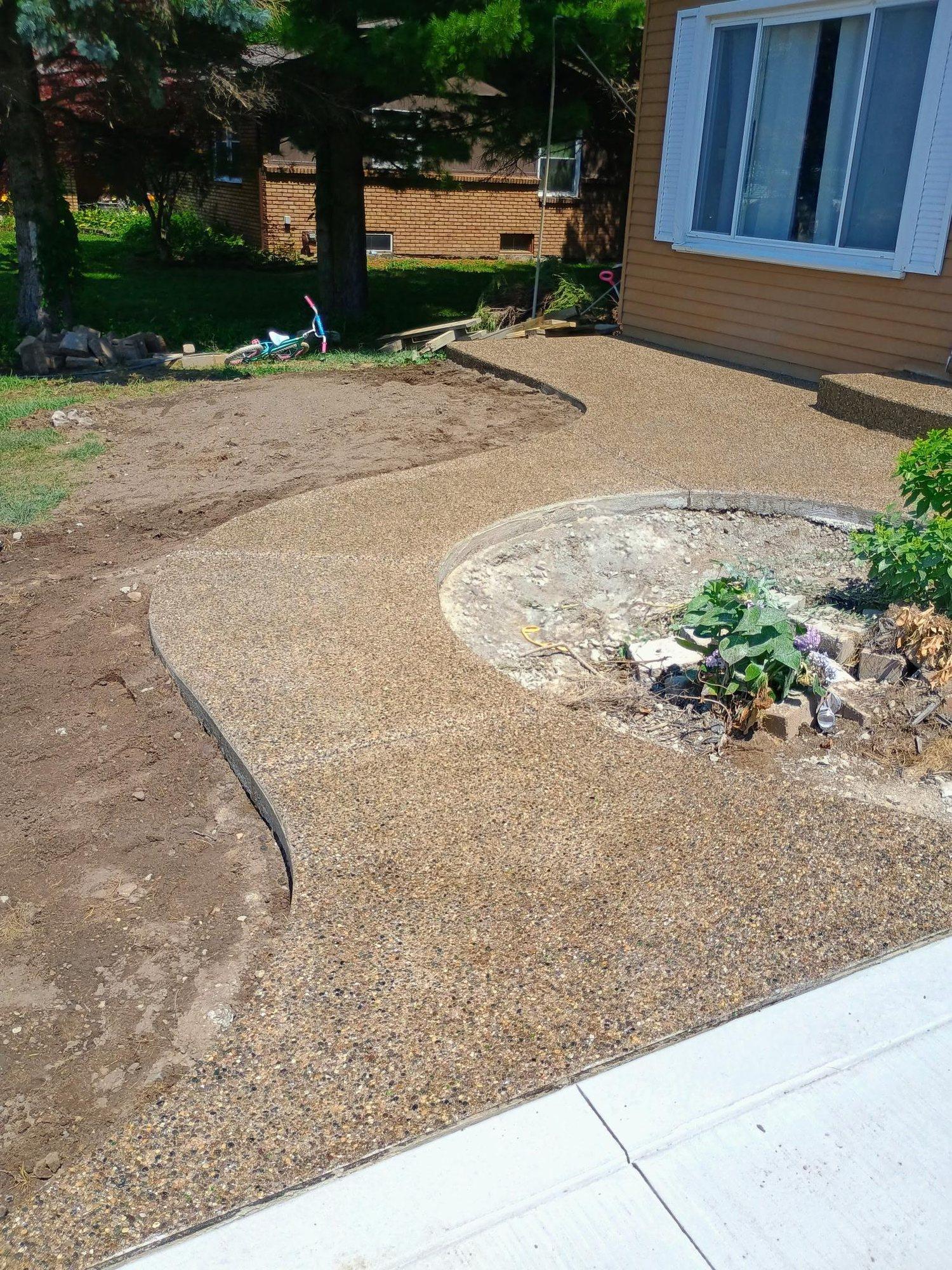
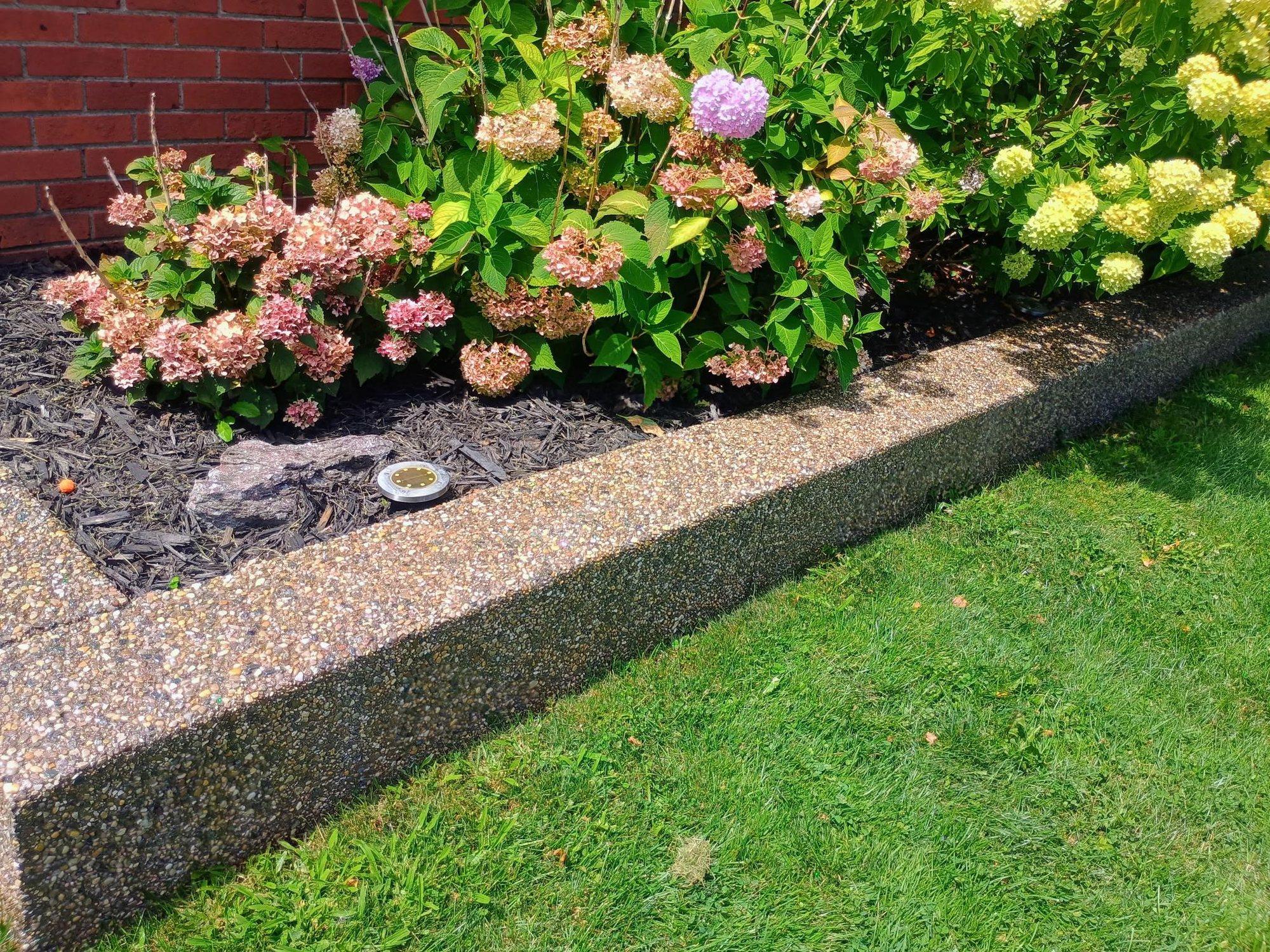
Exposed aggregate is concrete where the thin layer of cement paste on top is removed during finishing to reveal the stones in the mix. The result is a textured, natural-looking surface with color and character that comes from the stone itself.
- Traction: Excellent. The texture gives good grip, even when it’s wet.
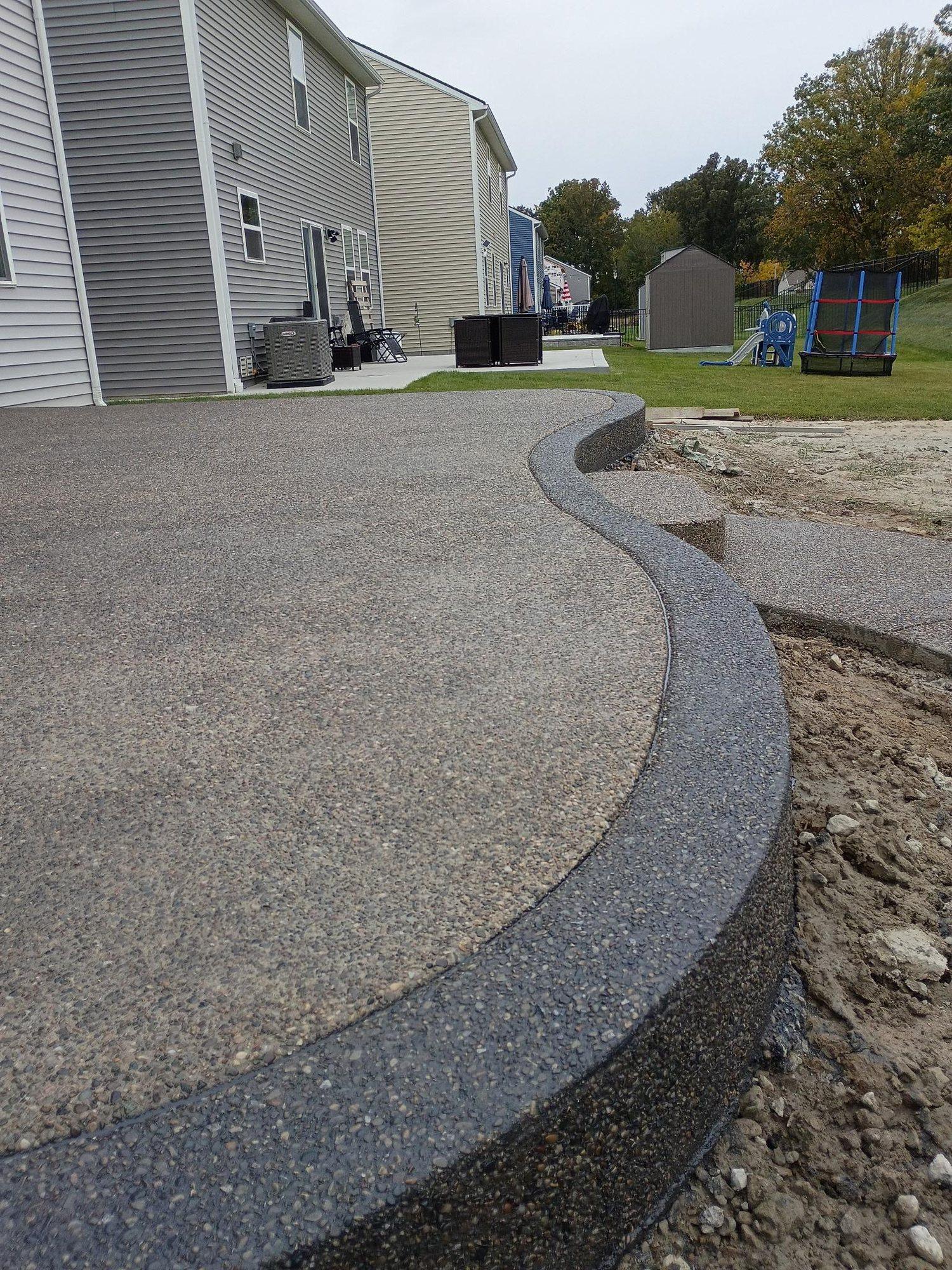
- Looks: Natural and timeless. It pairs especially well with a smooth, contrasting border.
- Upkeep: Hides dirt and minor wear well. Sealing enriches the stone color and helps hold the aggregate in place.
- Feel: Textured underfoot. Stone size affects how comfortable it is for bare feet.
Exposed aggregate is a big part of our portfolio. You’ll see it in patios, walkways and garden walls throughout our project gallery.
Stamped Concrete Patios
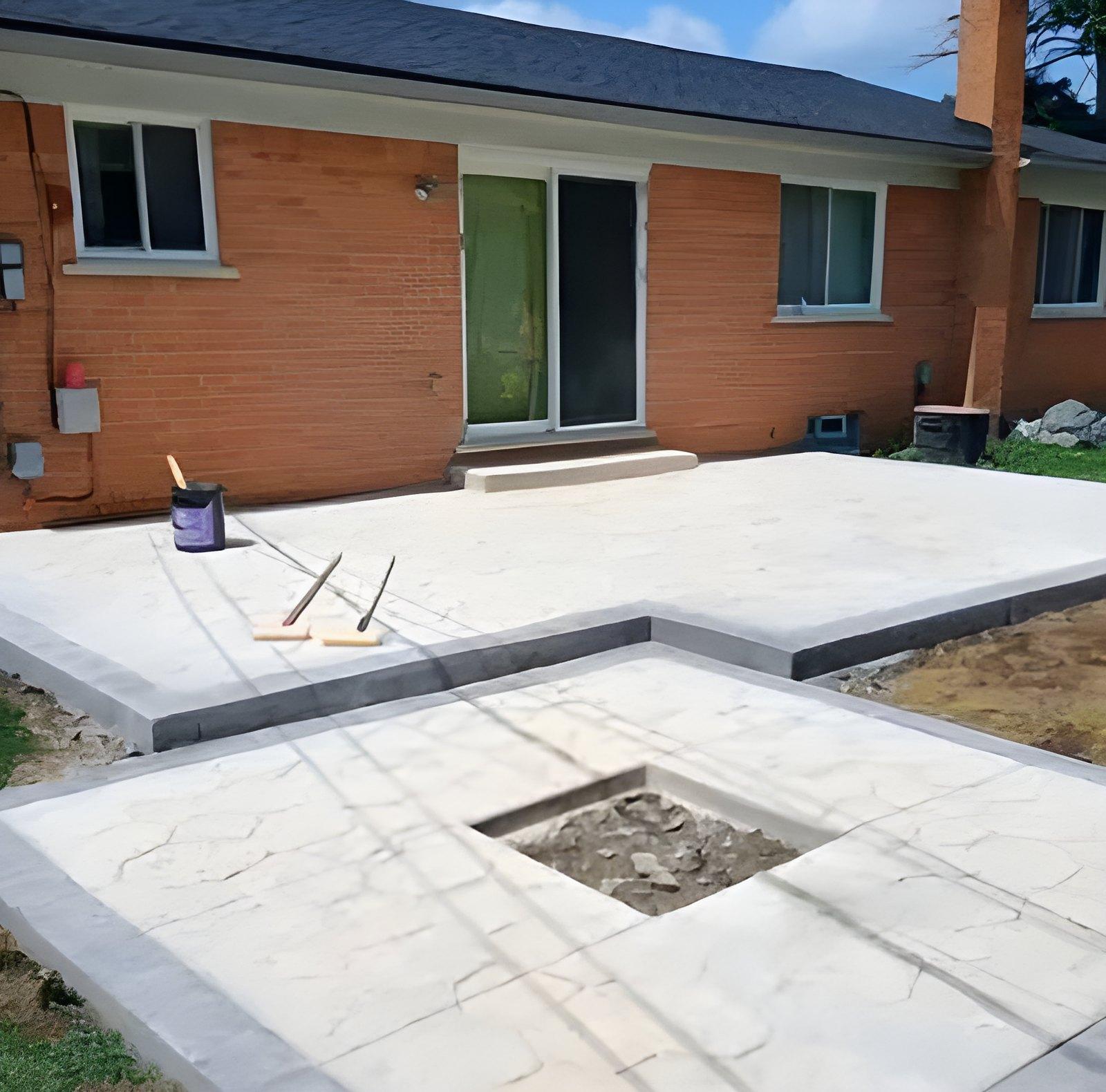
Stamped concrete is pressed with textured mats while it’s still workable, imprinting patterns that resemble natural stone, slate, brick or tile. Color is added to the concrete or the surface to complete the look.
- Traction: Depends on the pattern and sealer. Sealed stamped concrete can get slick when wet, so an anti-slip additive in the sealer is a good idea around pools and steps.
- Looks: The most decorative option, and the closest look to stone or pavers without separate pieces that shift or sprout weeds.
- Upkeep: Needs periodic resealing to protect the color and keep the pattern crisp. Faded stamped concrete can often be brought back with cleaning and a fresh coat of sealer.
- Cost: Generally higher than broom or exposed aggregate because of the extra labor, color and sealing.
Broom Finish Patios
A broom finish is made by dragging a broom across freshly floated concrete, leaving fine parallel ridges. It’s the standard finish for driveways and sidewalks for good reason.
- Traction: Very good, which is why it’s the default for outdoor flatwork.
- Looks: Clean and simple. Borders, curves and a well-planned joint pattern add interest without extra cost.
- Upkeep: Low. Periodic cleaning and sealing protect it from salt and stains.
- Cost: Typically the most economical finish.
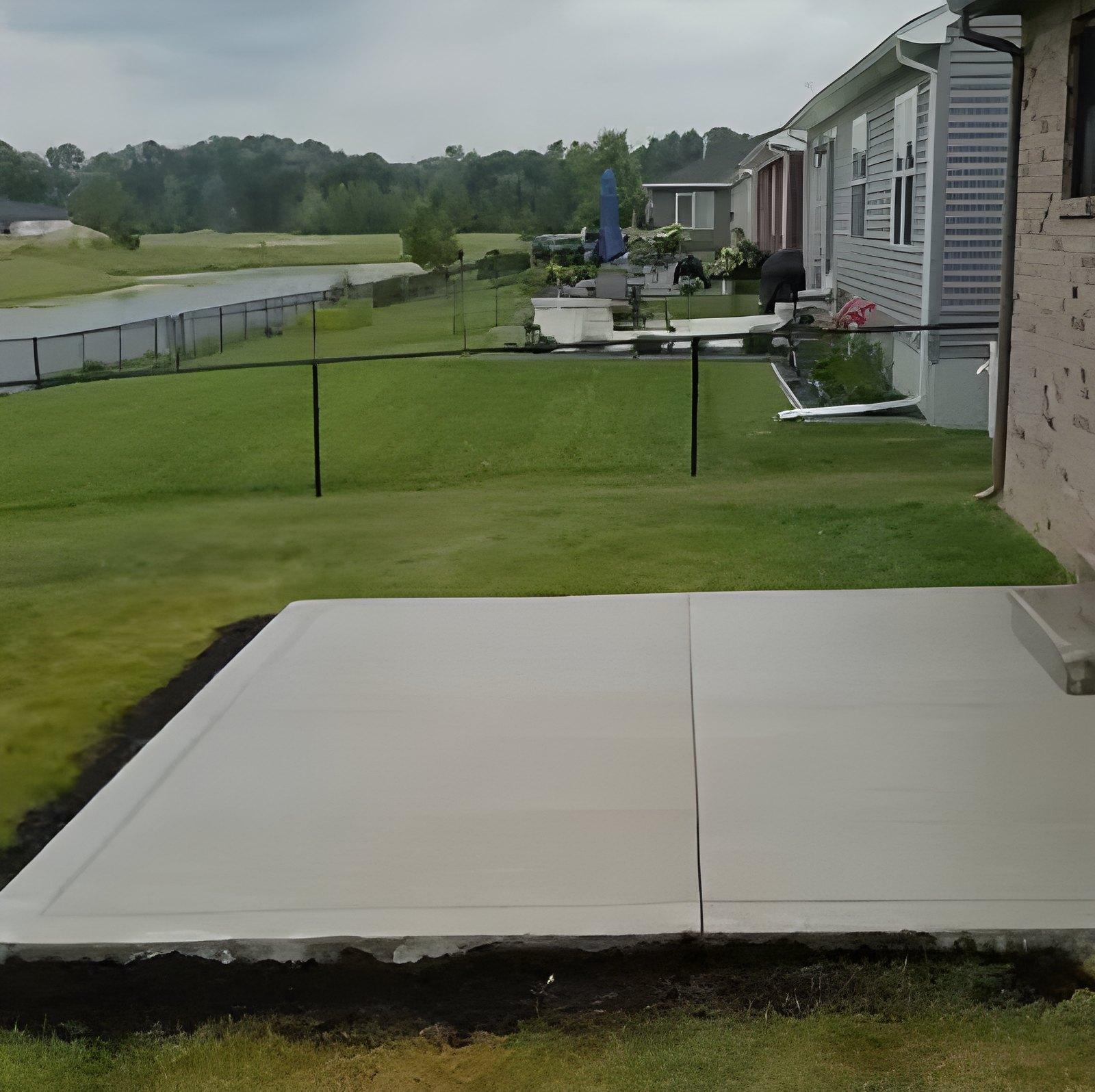
Which Concrete Patio Finish Is Right for You?
There’s no single best finish, only the best fit for how you’ll use the space. A quick way to decide:
- Choose exposed aggregate if you want natural texture, strong traction and a surface that hides wear. It’s a favorite for patios that connect to walkways and garden areas.
- Choose stamped concrete if you want the look of stone or brick and don’t mind resealing every few years.
- Choose broom finish if you want a clean, practical patio and would rather put the budget toward a larger size.
You can also combine them. A broom or exposed-aggregate field with a smooth, contrasting border is a popular look that usually costs less than a fully stamped patio.
How Big Should Your Patio Be?
The most common patio regret isn’t the finish. It’s building too small. Start with what you want to fit, then add space to move around it.
- Dining: Measure your table, then allow roughly 3 feet beyond each edge so chairs can be pulled out and people can walk behind them.
- Grilling: Give the grill its own zone, with space for the cook to work and a path that doesn’t cut through the dining area.
- Lounging: Lounge chairs and sectionals take more room than they look like they will. Measure them.
- Fire pit: Allow room for seating in a full circle around it, and check your municipality’s rules on open fires.
Measure before your estimate
Lay out a garden hose or string where you think the patio will go and set your furniture inside it. It’s the easiest way to see if the size works before any concrete is poured.
Planning Details That Make a Patio Feel Finished
Shape
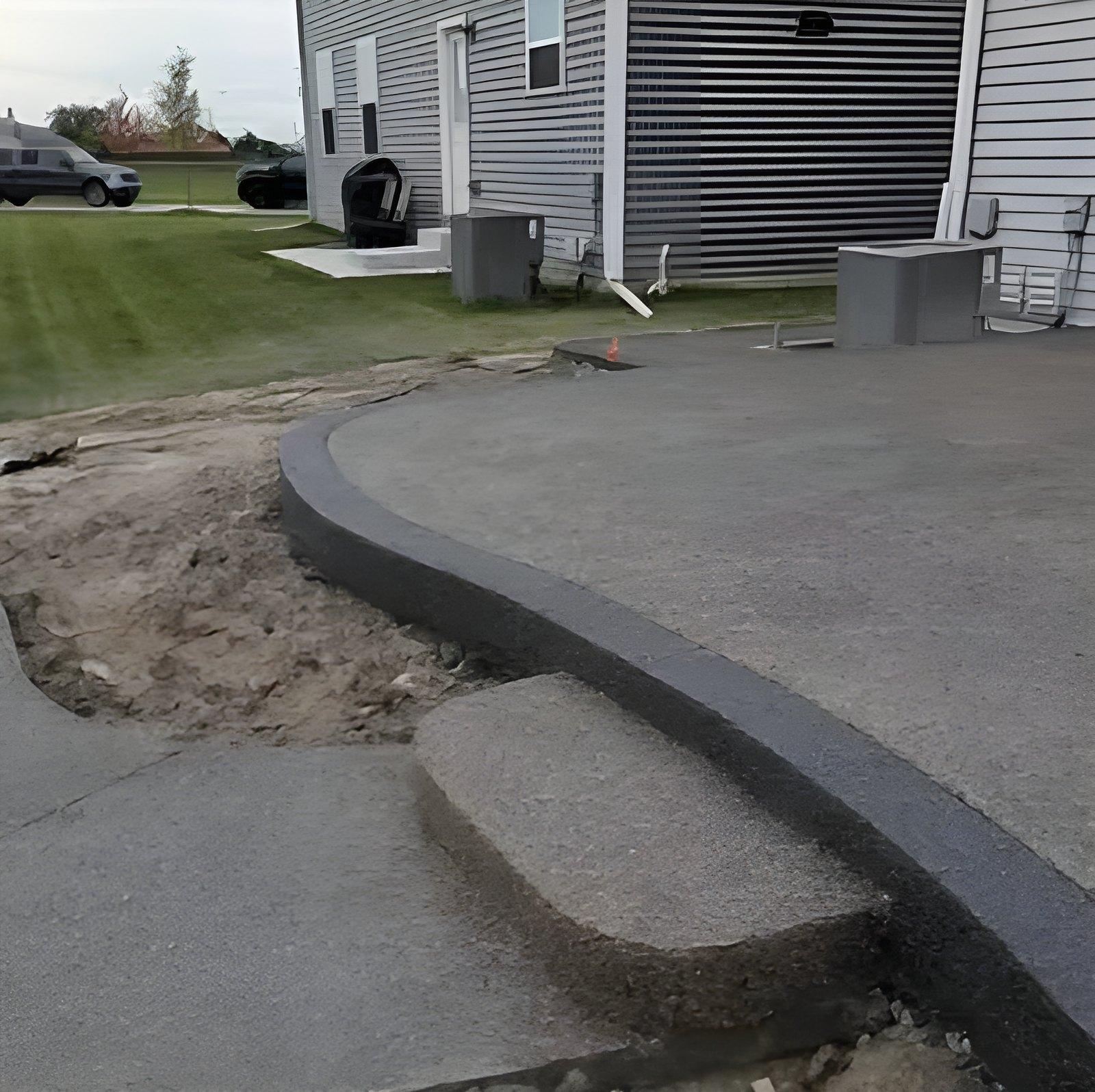
Concrete can be formed into almost any shape. Sweeping curves that follow a garden bed, cut-outs for planters, or a patio that wraps a corner of the house all make a yard feel designed rather than added on. Curves take more forming time, so they can add some cost.
Drainage
A patio needs a slight slope away from the house so rain runs off instead of pooling at the foundation. The slope is gentle enough that you won’t notice it when you’re sitting at the table.
Connections
Think about how the patio meets the back door, existing walkways, steps and the lawn. Matching the finish of a walkway or adding a step at the door is much easier to plan up front than to add later.
Sealing
Most decorative patios benefit from a sealer once the concrete has cured. It protects against stains and moisture and deepens the color of stamped and exposed-aggregate finishes. See our guide to how often to seal concrete.
Getting Your Patio Estimate
Bring your wish list: the furniture you want to fit, the finish you’re leaning toward and any photos of patios you like. At the estimate visit we look at the grade, drainage and access, and we can price more than one finish so you can compare.
Enzo’s Concrete pours custom concrete patios for homeowners across Macomb County, including patios in Shelby Township and patios in New Baltimore. If you’re planning a pool area too, our pool deck guide covers finishes and drainage around the water.
Frequently Asked Questions
- Is exposed aggregate slippery?
- No. The exposed stone gives it more texture and traction than smooth concrete. A glossy sealer can reduce traction somewhat, so ask about sealer options for areas that get wet often.
- Does stamped concrete crack?
- Like all concrete, stamped concrete can crack. Control joints are placed within the pattern to guide cracking, and a good base and proper drainage reduce the risk.
- How thick is a concrete patio?
- Residential patios are commonly about 4 inches thick. Areas that will hold heavy features, like a hot tub, may need a thicker slab or added reinforcement, so mention them at your estimate.
- Can you pour a patio next to my existing concrete?
- Usually, yes. Tying a new patio into an existing walkway or step is common. New concrete will start out lighter in color than older, weathered concrete and blends in over time.
Ready for Your Own Patio Project?
See finished work and what to expect on our custom concrete patios page, browse the project gallery, or call or text (586) 231-4217 to talk through your plans.