Key Takeaways
- Hairline cracks are normal. Widening cracks, sunken or heaved slabs, crumbling edges and standing water are signs a concrete driveway replacement may be the better investment.
- Most driveway failures start underneath. A compacted base, proper slope and well-placed control joints matter as much as the concrete itself.
- The tear-out and pour usually take a few working days. Plan on roughly a week before parking on a new driveway.
- Skip de-icers the first winter, never use ammonium-based de-icers, and seal the surface to protect it from salt and freeze-thaw damage.
In This Guide
- Signs Your Concrete Driveway Needs Replacing
- How a New Concrete Driveway Is Built, Step by Step
- What Makes a Concrete Driveway Last in Michigan
- How Long Does Driveway Replacement Take?
- Driveway Permits in Macomb County
- What Affects the Cost of a New Concrete Driveway
- Caring for Your New Driveway Through Michigan Winters
- Questions to Ask a Driveway Contractor
- Frequently Asked Questions
Your driveway is the hardest-working concrete on your property. It carries vehicles every day, gets scraped by shovels and plows, soaks up road salt all winter and freezes and thaws dozens of times a year. In Michigan, that adds up fast.
If your driveway is cracked, sinking or flaking apart, you’re probably wondering whether it can be patched or needs to be replaced, and what a new concrete driveway actually involves. This guide walks through the warning signs, the replacement process step by step, realistic timelines and how to protect your investment once it’s poured.
Signs Your Concrete Driveway Needs Replacing
Not every crack means replacement. Concrete shrinks as it cures, and thin hairline cracks, especially along control joints, are normal. The question is whether the slab is still structurally sound. These are the signs that usually point toward replacement:
- Cracks that keep growing or have edges at different heights. Offset cracks are trip hazards and usually mean the base underneath has moved.
- Sinking or heaving slabs. Sections that have settled or lifted often trace back to a washed-out or poorly compacted base, or water getting under the slab and freezing.
- Widespread scaling and spalling. When the top surface flakes, pits or pops off across large areas, salt and freeze-thaw have broken down the surface.
- Standing water or ice. Puddles that sit on the driveway or drain toward the garage or house point to a slope problem that resurfacing won’t fix.
- Crumbling edges and apron. The apron at the street and the edges take the most abuse and are often the first to fail.
If the damage is limited to one section, or your driveway is sound but too narrow, you may have other options. Our guide to driveway expansion vs. replacement covers when adding on makes more sense than starting over.
How long does a concrete driveway last?
A well-built concrete driveway commonly lasts 25 years or more. The biggest factors are the base preparation, the concrete mix, drainage, and how it’s cared for, especially how much salt it sees each winter.
How a New Concrete Driveway Is Built, Step by Step
Every site is different, but a professional driveway replacement generally follows the same sequence. Knowing the steps helps you compare estimates and ask better questions.
- Site visit and estimate. The contractor measures the driveway, checks the grade and drainage, looks at access for equipment and talks through finish options.
- Utility locating and permits. In Michigan, MISS DIG 811 (opens in a new tab) must be notified before digging so buried utility lines are marked. Work at the street approach may also need a permit (more on that below).
- Tear-out and removal. The old concrete or asphalt is broken up and hauled away.
- Grading and base preparation. The subgrade is shaped for drainage, and a granular base is placed and compacted. This is the most important step you’ll never see once the driveway is finished.
- Forming and reinforcement. Forms set the edges, shape and slope. Reinforcement such as wire mesh, rebar or fibers may be added depending on the design.
- The pour and finish. Concrete is placed, leveled and finished. Most driveways get a broom finish for traction. Edges are tooled and control joints are cut or formed.
- Curing. The concrete is protected while it gains strength, and the driveway is kept off-limits until it’s ready for traffic.
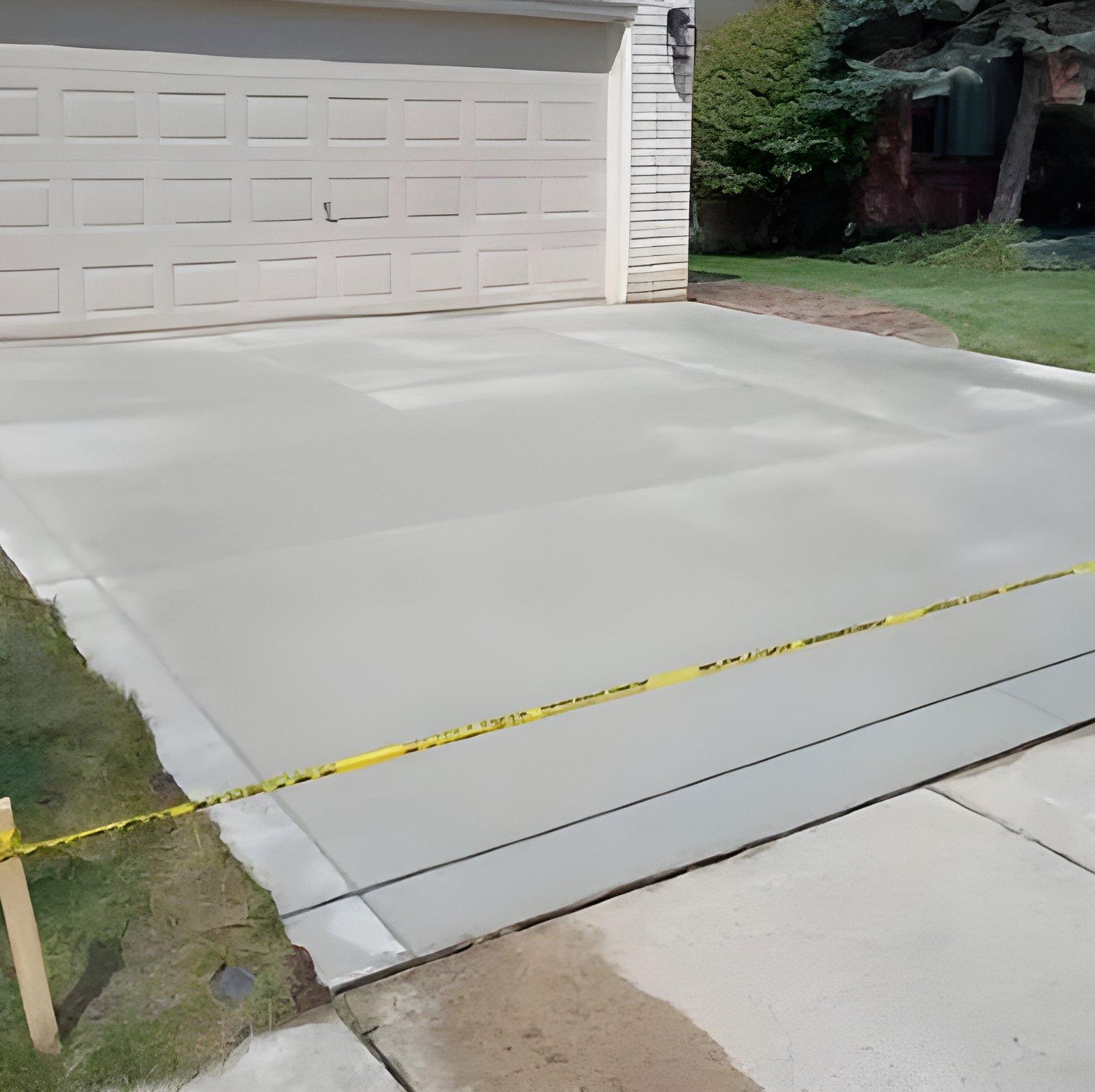
What Makes a Concrete Driveway Last in Michigan
Two driveways can look identical on the day they’re poured and age very differently. The difference is in details most homeowners never see.
A Compacted Base and Proper Drainage
Water is concrete’s biggest enemy in a freeze-thaw climate. When water collects under a slab and freezes, it expands and lifts the concrete, and when it thaws, voids are left behind. A well-compacted granular base and a driveway sloped to shed water away from the garage and house prevent most of the settling and heaving people see in older driveways.
The Right Thickness
Residential driveways for passenger cars are commonly poured about 4 inches thick. Areas that carry heavier loads, like RVs, work trucks or the apron where vehicles turn, are often poured thicker, around 5 to 6 inches. Tell your contractor what you’ll actually park on the driveway so the thickness and base suit it.
An Air-Entrained Mix
Exterior concrete in cold climates is typically made with air-entraining admixtures, which create microscopic air bubbles that give freezing water room to expand. It’s one of the main defenses against surface scaling in Michigan winters.
Well-Placed Control Joints
Concrete will crack. Control joints tell it where. A common rule of thumb is to space joints no more than two to three times the slab thickness in feet (roughly 8 to 12 feet apart for a 4-inch slab) and cut them about one quarter of the slab’s depth. Joints placed well keep cracks in straight, intentional lines instead of random ones across the surface.
How Long Does Driveway Replacement Take?
For a typical residential driveway, removal, base preparation and the pour usually happen over a few working days. Size, access, how much base work the site needs and the weather all affect the schedule.
Then comes curing. General industry guidance is to keep foot traffic off new concrete for a day or two and to wait about a week before driving passenger cars on it. Concrete keeps gaining strength for about a month, so hold off on heavy vehicles, trailers and sharp turns with the wheels during that time. Your contractor should give you specific timing for your project.
Michigan pouring season
Concrete can be placed in cool weather with precautions like insulated blankets, but freezing temperatures during the early curing period can damage a new slab. Most driveway work in Michigan happens from spring through fall, and good contractors schedule pours around the forecast.
Driveway Permits in Macomb County
Permit rules depend on where you live and what you’re changing. Replacing a driveway in the same footprint is treated differently from widening it, and work at the street is treated differently from work on your own lot.
- If your driveway approach sits in the right-of-way of a county road, the Macomb County Department of Roads issues the approach permit.
- State highways like M-19, M-29 and M-53 fall under the Michigan Department of Transportation.
- Your city or township may have its own permit, width or setback rules, especially for widening and for work at the sidewalk or curb.
Our local service area pages include permit pointers for each community we serve, such as driveways in Macomb Township and driveways in Chesterfield Township. Always confirm current rules with your municipality before work begins.
What Affects the Cost of a New Concrete Driveway
Online price-per-square-foot numbers rarely match real quotes, because every driveway is different. These are the factors that actually move the price:
- Size and shape. Square footage is the starting point. Curves, flares and multiple levels add forming time.
- Tear-out and disposal. Removing and hauling away old concrete or asphalt is part of the job.
- Base and grading work. Sites with poor drainage, soft soil or significant grade changes need more preparation.
- Thickness and reinforcement. Thicker slabs and added reinforcement for heavier vehicles use more material.
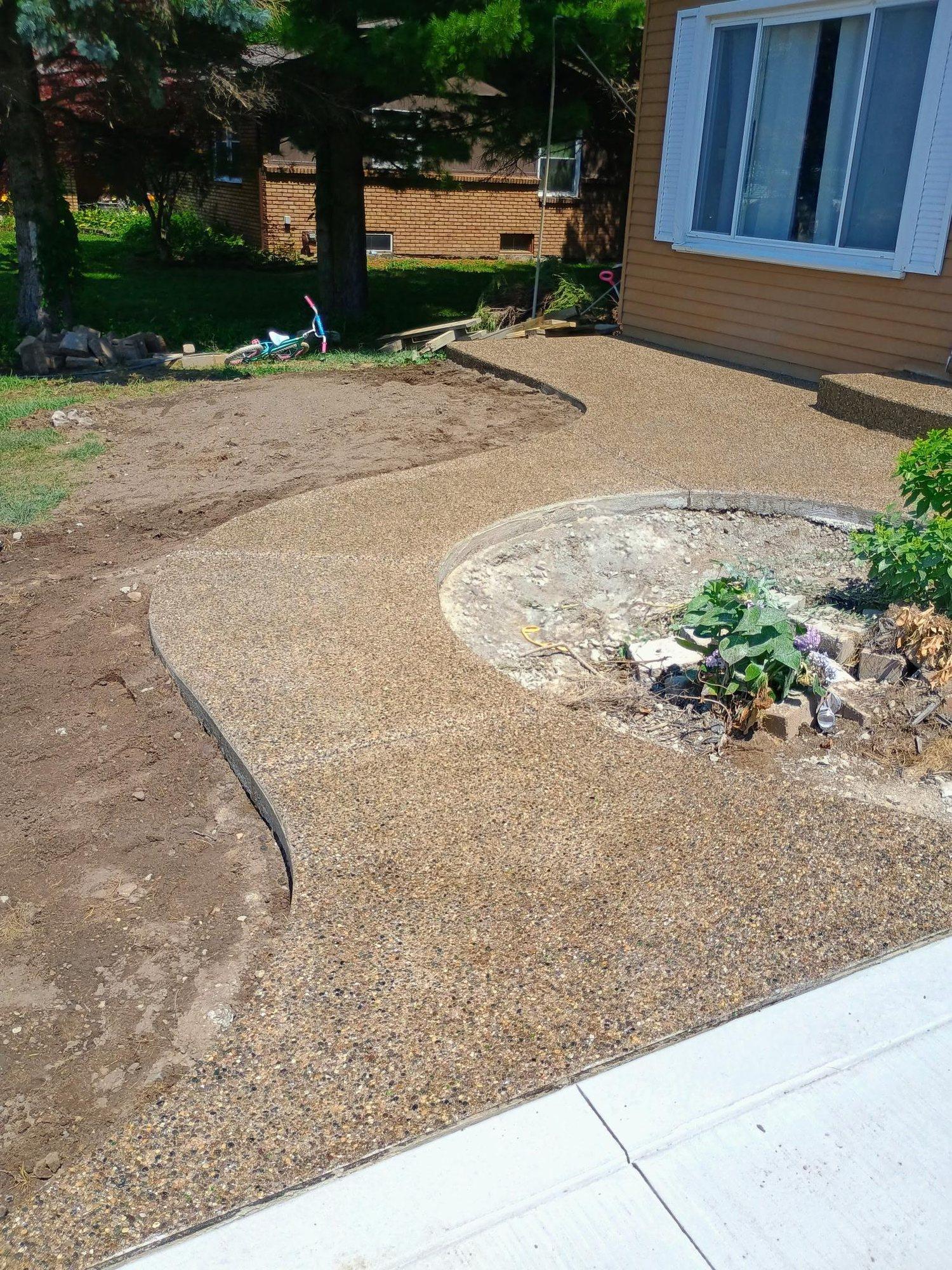
- Finish and details. Broom finish is standard. Decorative borders, exposed aggregate or stamped sections cost more.
- Access. Tight lots that keep trucks and equipment from reaching the work area take longer.
That’s why we price every driveway after seeing it. Request a free estimate and your quote will reflect your actual driveway, not an average.
Caring for Your New Driveway Through Michigan Winters
- Skip de-icers the first winter. New concrete is most vulnerable to salt damage. Use sand for traction instead.
- Never use ammonium nitrate or ammonium sulfate de-icers. They chemically attack concrete. Read the label before you buy.
- Use a plastic shovel blade where you can, and ask plow services to raise their blades slightly.
- Clean off salt and road grime in spring, and don’t let slush from vehicles sit on the surface all winter.
- Seal it. Once the concrete has cured, a quality sealer helps keep water and salt out of the surface. Our guide on how often to seal concrete explains sealer types and timing.
Questions to Ask a Driveway Contractor
Before you sign, a good contractor should be able to answer these clearly:
- Are you licensed and insured?
- How will you prepare the base, and how will the driveway drain?
- How thick will the slab be, and will it be reinforced?
- Where will the control joints go?
- Who handles utility locating and any permits?
- When can I walk on it, drive on it and seal it?
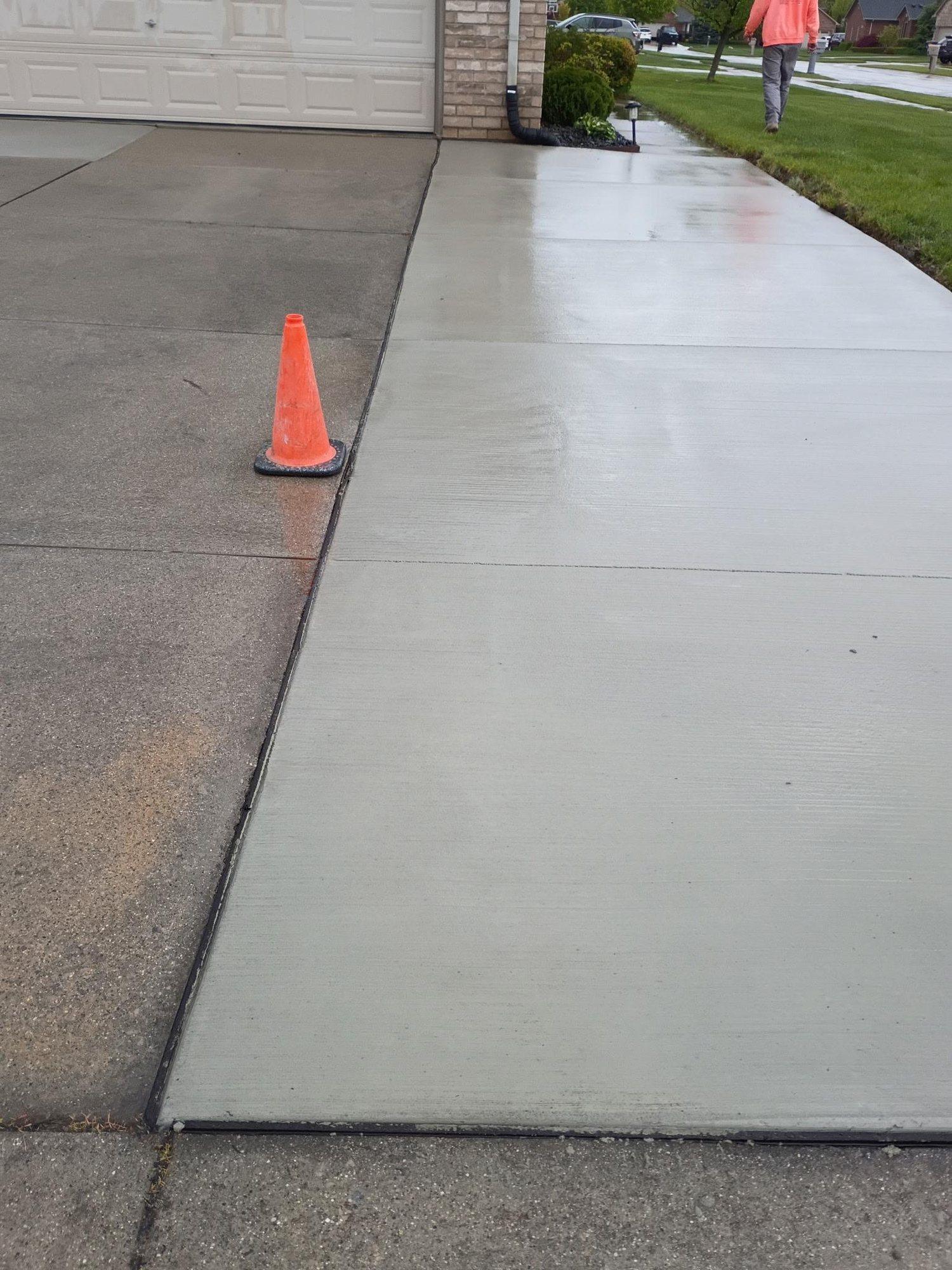
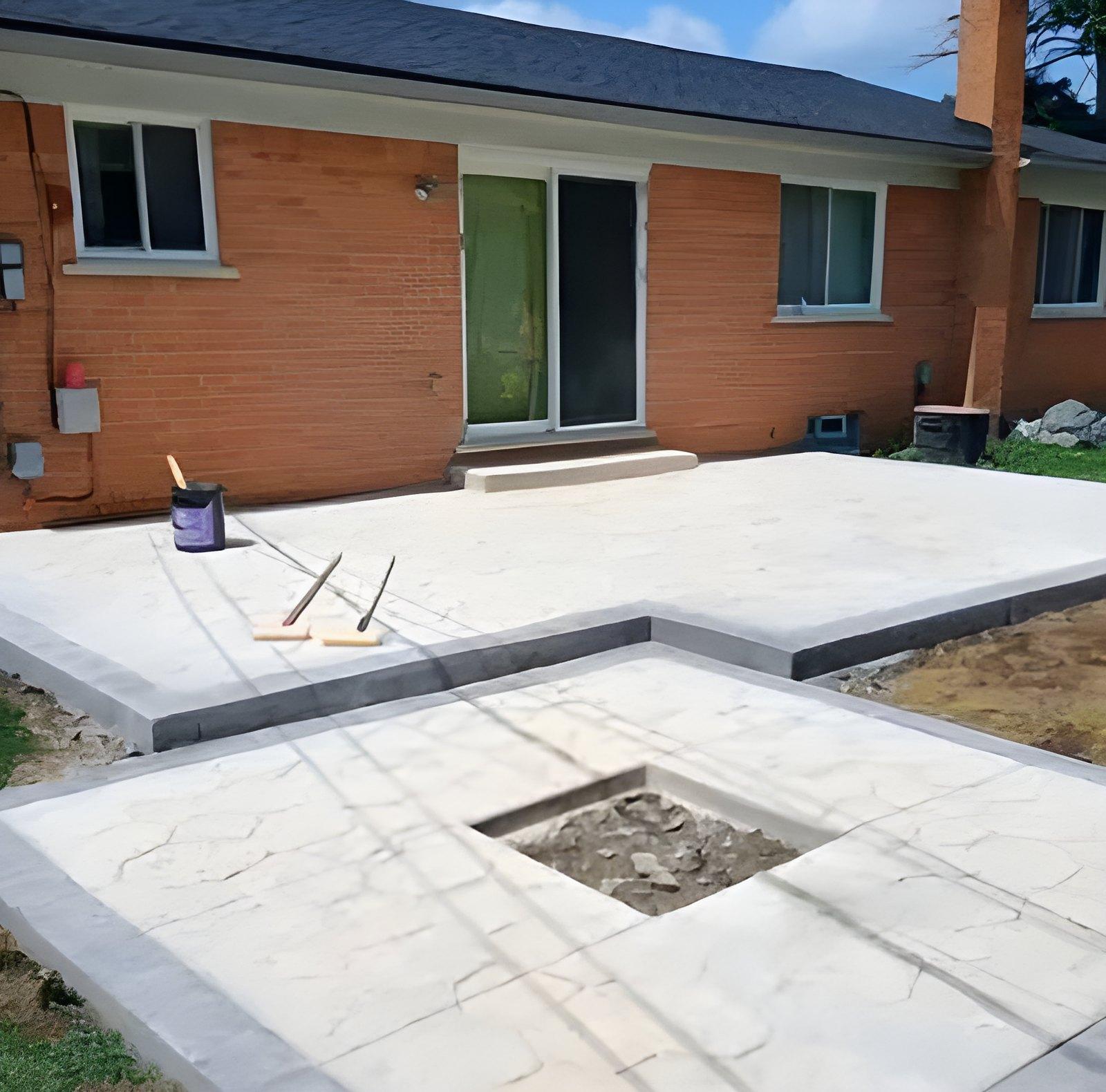
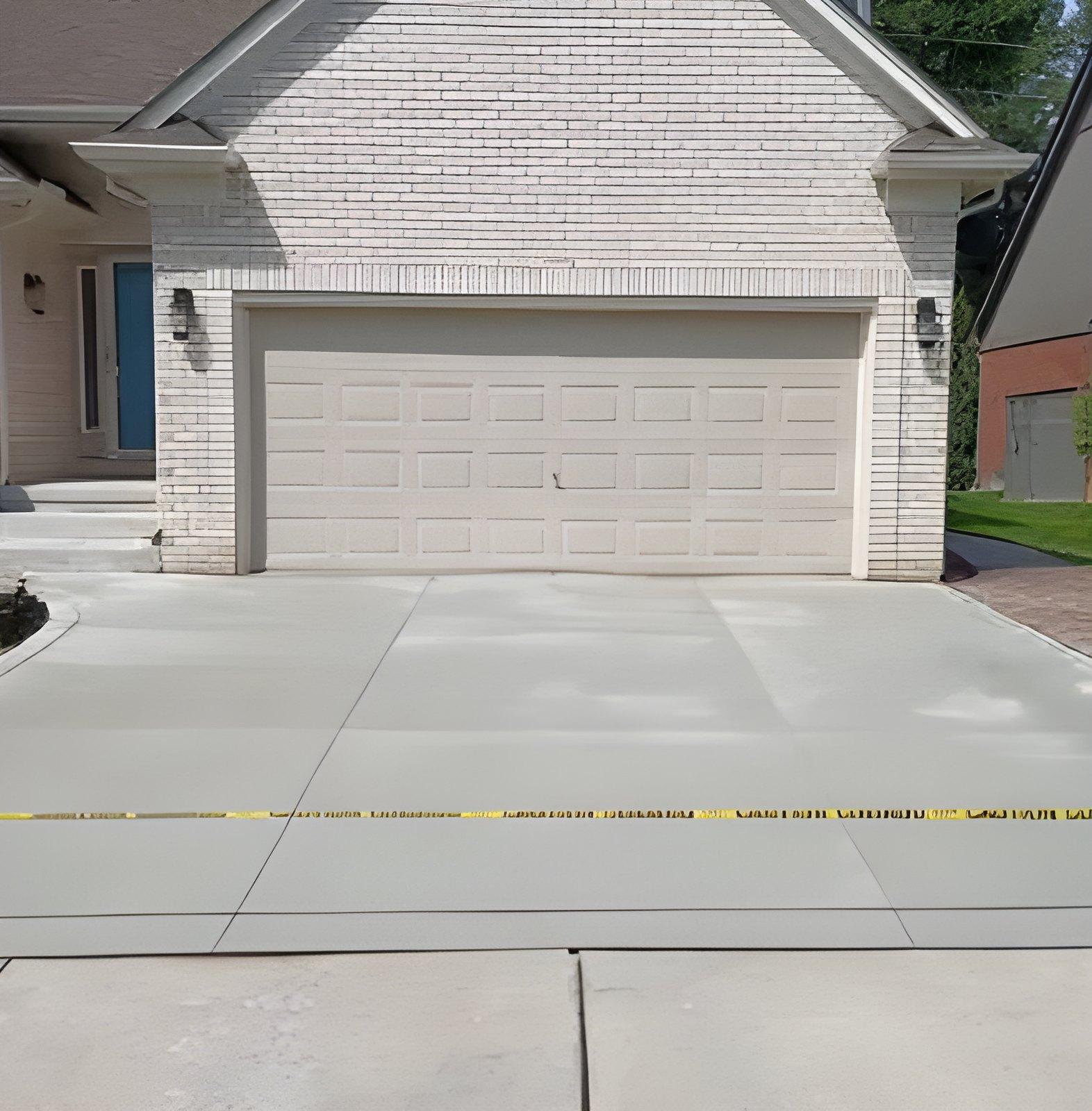
Enzo’s Concrete is a licensed, insured, family-owned concrete driveway contractor based in New Haven and serving homeowners across Macomb County. You can see finished driveways in our project gallery.
Frequently Asked Questions
- Can I resurface my driveway instead of replacing it?
- Resurfacing can refresh a driveway that is structurally sound but worn on top. It won’t fix a sinking base, offset cracks or drainage problems, and a thin overlay on a failing slab usually cracks along with it.
- Is concrete or asphalt better for a Michigan driveway?
- Both are common. Concrete typically lasts longer, needs less routine maintenance and stays lighter in color, while asphalt usually costs less up front and needs periodic sealcoating. Concrete’s main vulnerability, salt and freeze-thaw damage, is reduced with a good mix, proper curing and sealing.
- How thick should a concrete driveway be?
- Driveways for passenger cars are commonly about 4 inches thick. Areas for heavier vehicles, such as RVs or work trucks, are often 5 to 6 inches. The base underneath matters as much as the thickness.
- When can I drive on a new concrete driveway?
- General guidance is about a week for passenger cars, with heavier vehicles waiting longer while the concrete continues to gain strength. Your contractor should give you timing for your specific driveway and weather.
Ready for Your Own Driveway Project?
See finished work and what to expect on our concrete driveways page, browse the project gallery, or call or text (586) 231-4217 to talk through your plans.