Key Takeaways
- A driveway expansion makes sense when the existing driveway is structurally sound. If it’s already failing, replacing it all at once is usually better value.
- New concrete is tied to the old with dowels or separated with an isolation joint. A clean, intentional joint is what makes an addition look planned.
- New concrete starts out lighter than weathered concrete and blends in over time. It won’t match perfectly on day one.
- Widening near the street or sidewalk often needs a permit, and some communities limit driveway width.
In This Guide
Another car, a teenager’s first vehicle, a boat or a trailer, or just room to open the doors without stepping in the grass. Most homeowners who call about their driveway don’t need a whole new one. They need more of it.
Widening a concrete driveway or adding a parking pad is often faster and less expensive than full replacement. But it isn’t always the right call. Here’s how to decide between a driveway extension and a replacement, and what to expect from either.
Expansion or Replacement? Start With the Existing Driveway
The deciding factor is the condition of the concrete you already have. An addition is only as good as what it’s attached to.
An Expansion Makes Sense When…
- The existing slabs are level, with no significant sinking or heaving.
- Cracks are minor and haven’t shifted out of plane.
- Water drains off the driveway properly.
- You’re happy with the driveway, you just need more room.
Replacement Is Usually Better Value When…
- Large areas are scaled, pitted or crumbling.
- Sections have settled or lifted, creating trip edges.
- Water pools on the driveway or runs toward the garage.
- You’d be paying for an expansion now and a replacement in a few years anyway.
If you’re leaning toward replacement, our concrete driveway replacement guide walks through the full process.
Common Types of Driveway Expansions
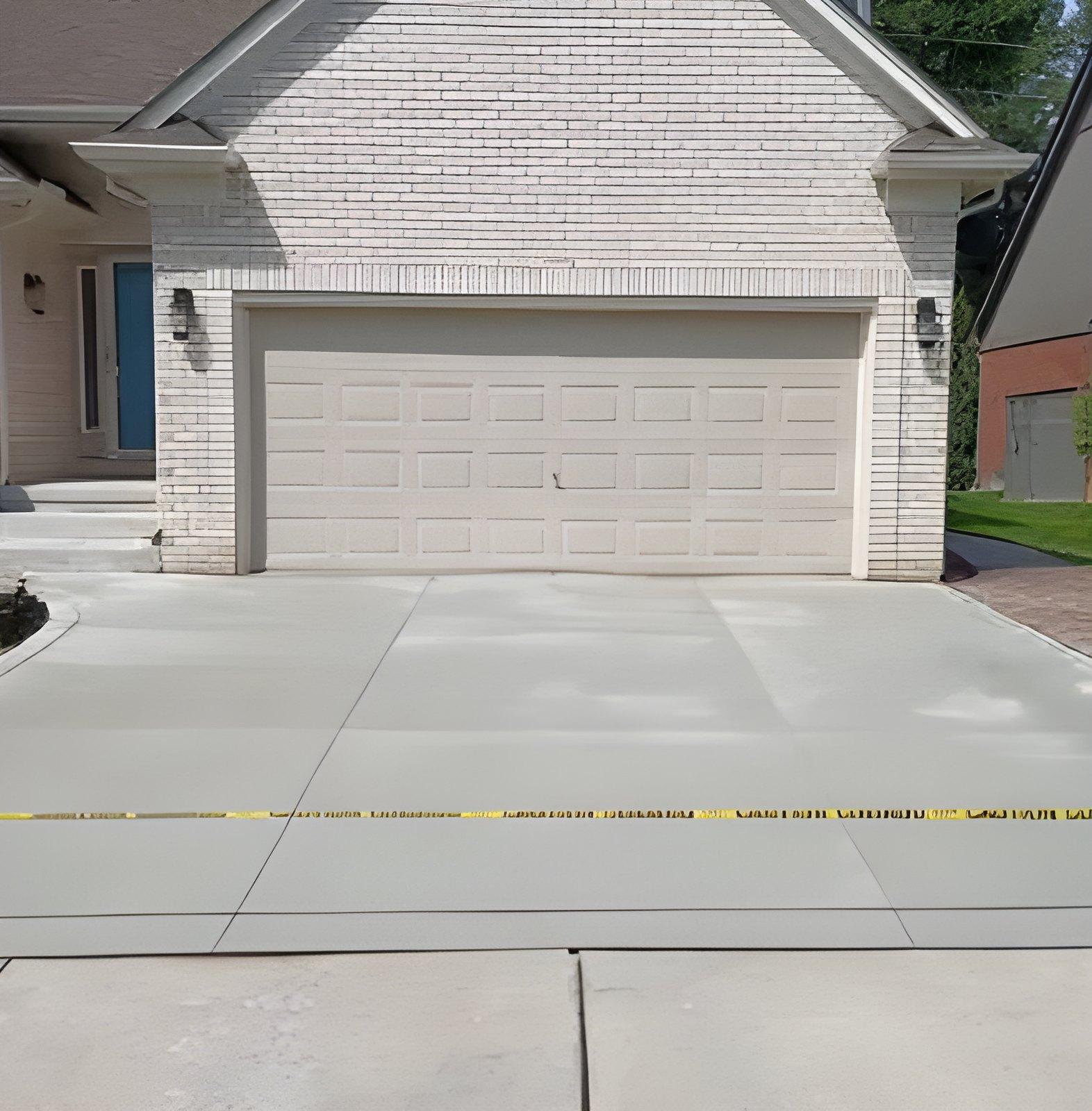
- Side widening: adding width along one or both sides for an extra parking space or easier entry. A parking space is commonly planned at around 9 to 10 feet wide, so check what you’ll park and how much room you need to open doors.
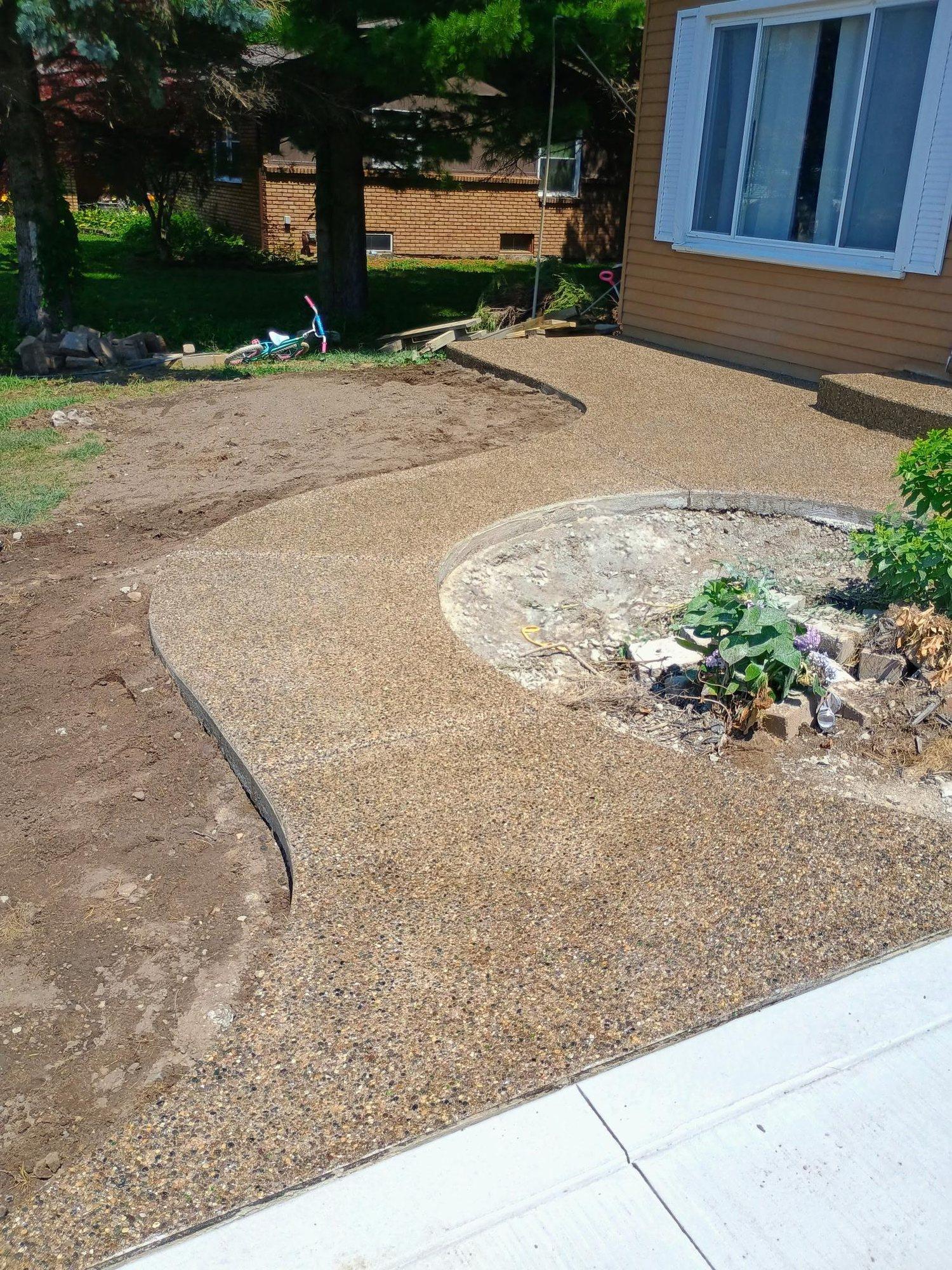
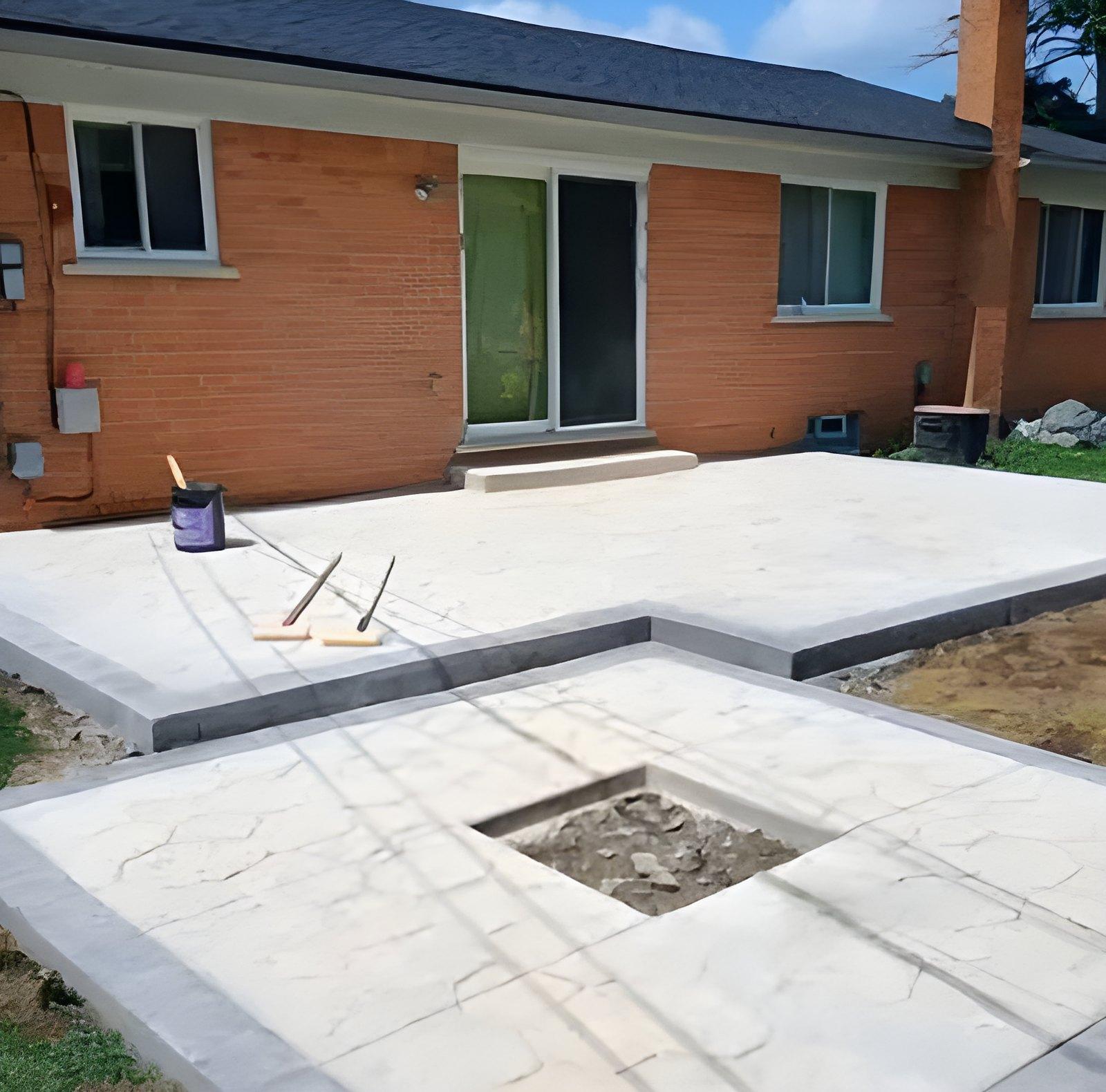
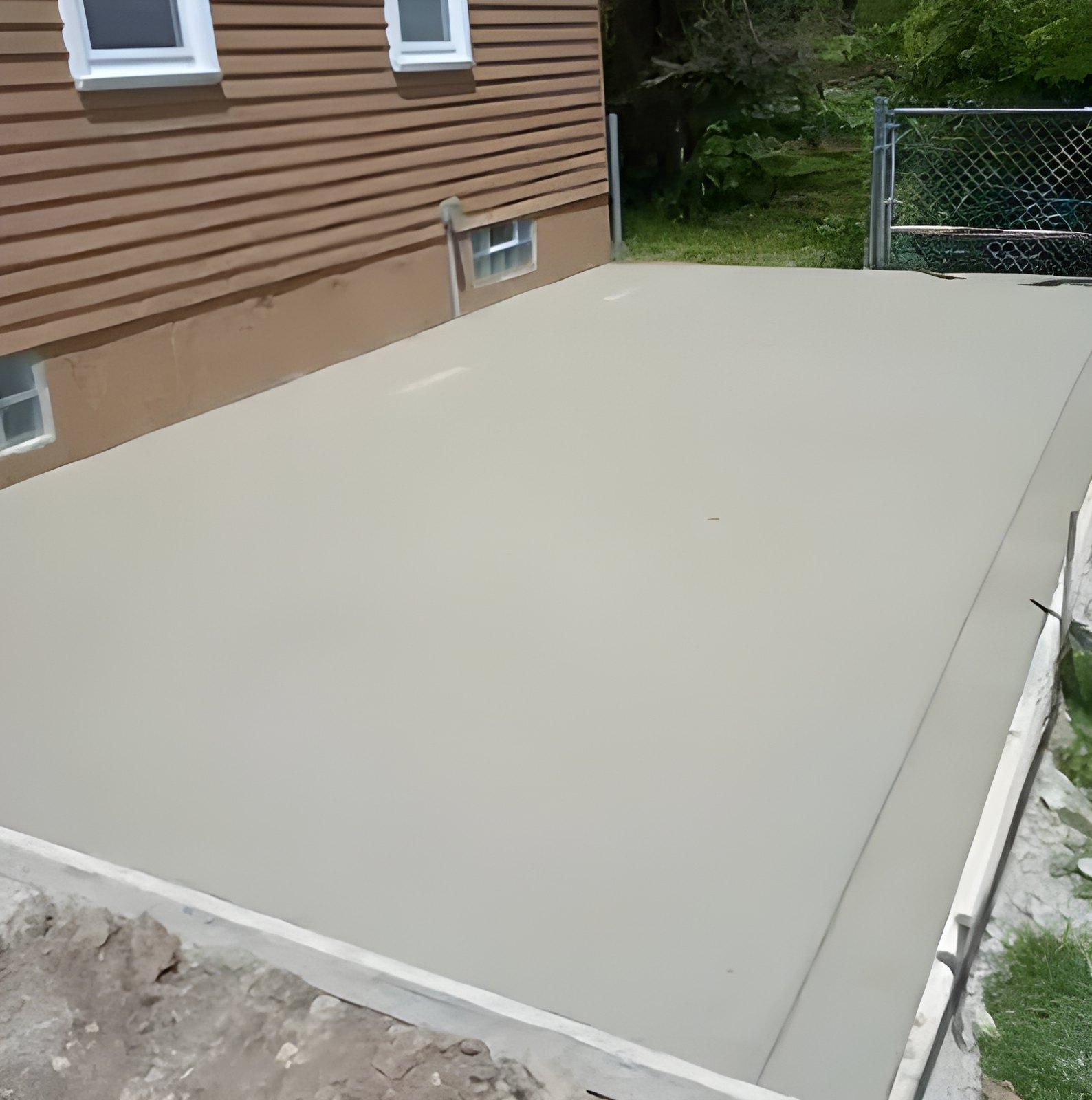
- Parking pads: a separate or attached slab beside the driveway or garage for a boat, trailer, camper or extra vehicle.
- Turnarounds: a wider area that lets you turn around instead of backing out onto a busy road.
- Flared aprons: widening the driveway where it meets the street so turning in is easier.
- Extensions: lengthening the driveway to reach a new garage, pole barn or backyard gate.
How New Concrete Ties Into Your Existing Driveway
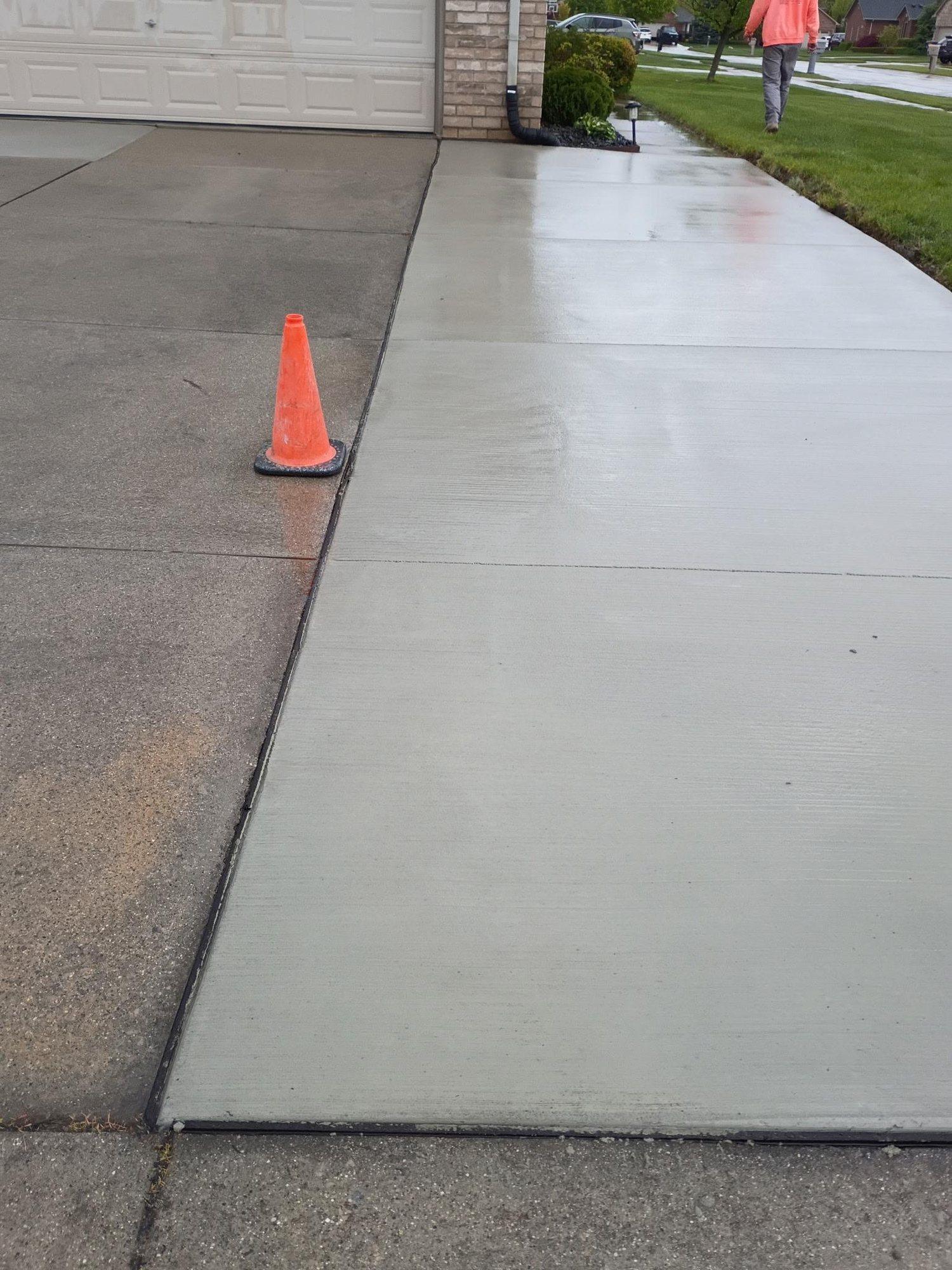
The joint between old and new concrete is what people notice, and it’s where poorly done expansions fail. There are two main approaches:
- Doweled or pinned connections. Steel dowels or rebar are drilled into the edge of the existing slab and set into the new concrete, helping keep the two at the same height as the ground moves.
- Isolation joints. A joint material separates the slabs so they can move independently. This is common where the new section carries a different load or sits on different ground.
Which is right depends on the soil, the loads and how the sections meet. Either way, the edge of the existing driveway often needs to be saw-cut clean so the new concrete meets a straight, solid face instead of a chipped edge.
Will the New Concrete Match the Old?
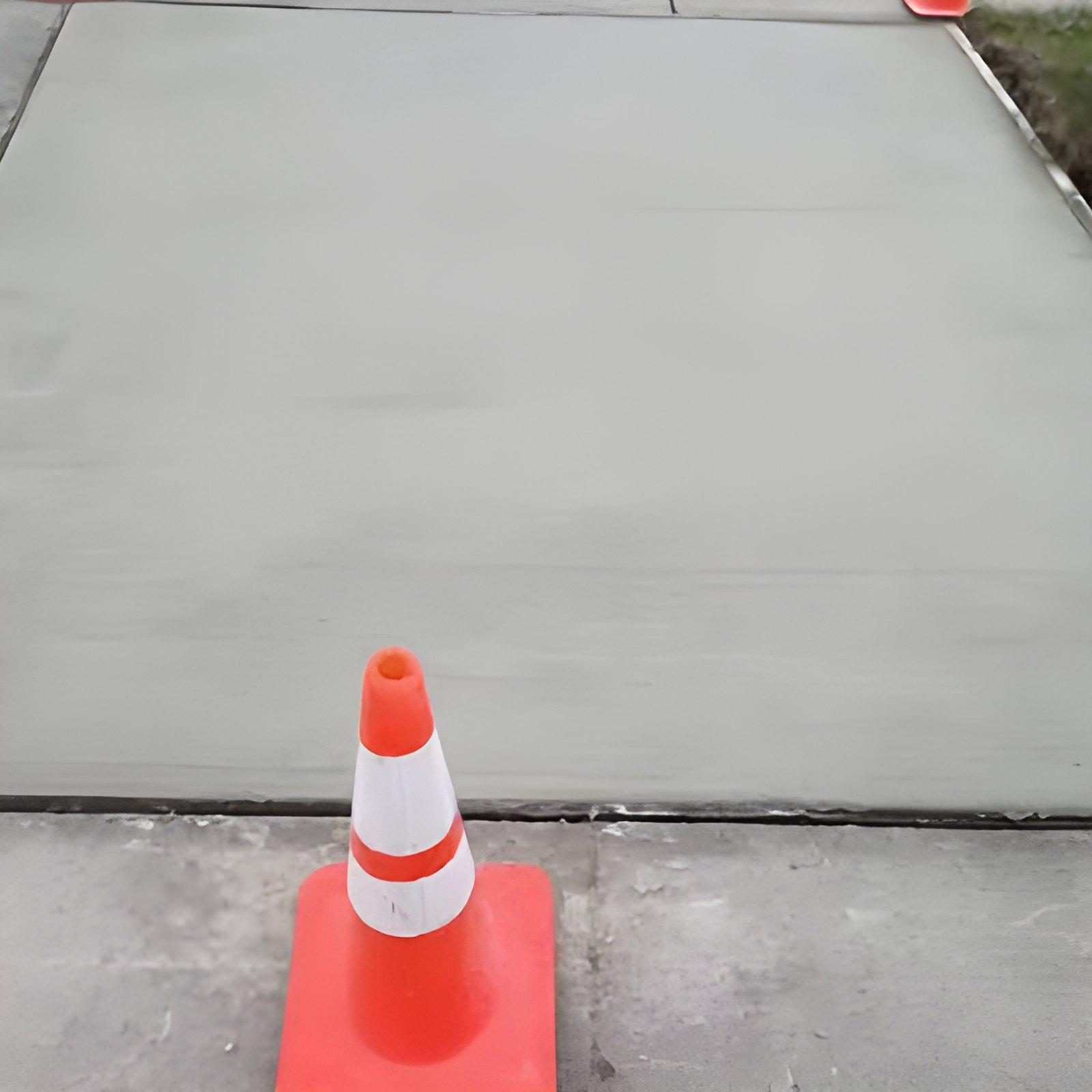
Not exactly, at least at first. New concrete starts out lighter than concrete that has weathered for years, and the finish texture of an older driveway has usually worn down. The difference fades as the new section ages, but it rarely disappears completely.
A few things help an addition look intentional rather than patched:
- A clean, straight joint line between old and new.
- A finish that matches the existing texture as closely as possible.
- Cleaning, or cleaning and sealing, the existing driveway so the colors are closer. See our guide on how often to seal concrete.
- Treating the addition as a design element, such as a border or a deliberately different finish on a parking pad.
Permits, Width Limits and Drainage
Widening a driveway is more likely to need approval than replacing one in the same footprint. Before you plan the size, check:
- The approach. Widening where the driveway meets the road affects the public right-of-way. On county roads in Macomb County, the Department of Roads issues approach permits. Your city or township may also have rules for the curb and sidewalk.
- Width and setback rules. Some communities limit how wide a driveway can be or how close it can come to a property line.
- HOA rules, if your neighborhood has an association.
- Drainage. More concrete means more runoff. The expansion should drain away from your house and shouldn’t send water onto your neighbor’s yard.
Our community pages include local permit pointers, for example driveway expansions in Sterling Heights and driveway expansions in Clinton Township.
Planning Your Expansion
- Decide what you need to park. Measure the vehicle, trailer or boat, and add room to open doors and walk around it.
- Mark it out. Spray paint or stakes and string help you see the size on the lawn.
- Think about heavier loads. Campers, boats on trailers and work trucks may need a thicker slab than a standard driveway.
- Look at what’s in the way. Trees, roots, downspouts, utility boxes and sprinkler lines can all affect the layout.
- Get the existing driveway assessed so you know whether expansion or replacement is the better investment.
Enzo’s Concrete builds driveway expansions and extensions and full driveway replacements across Macomb County. We’ll tell you honestly which makes more sense for your driveway.
Frequently Asked Questions
- Is it cheaper to widen a driveway than replace it?
- Usually, yes, because there’s less concrete to remove and pour. But if the existing driveway is failing, paying for an expansion now and a replacement soon after can cost more than replacing everything once.
- Can you add concrete next to an asphalt driveway?
- Yes. A concrete pad or widening can sit beside asphalt, with a clean edge between the two materials. Many homeowners use the opportunity to plan a full concrete replacement later.
- How wide should a two-car driveway be?
- Many two-car driveways are planned at roughly 18 to 24 feet wide, depending on the vehicles, the garage door layout and how much room you want for opening doors. Local width limits may also apply.
- Do I need a permit to widen my driveway in Macomb County?
- Often, especially if the work reaches the street, sidewalk or curb. Rules vary by city and township, and county roads add a Department of Roads permit for the approach. Check with your municipality before work begins.
Ready for Your Own Driveway Expansion Project?
See finished work and what to expect on our driveway expansions & extensions page, browse the project gallery, or call or text (586) 231-4217 to talk through your plans.